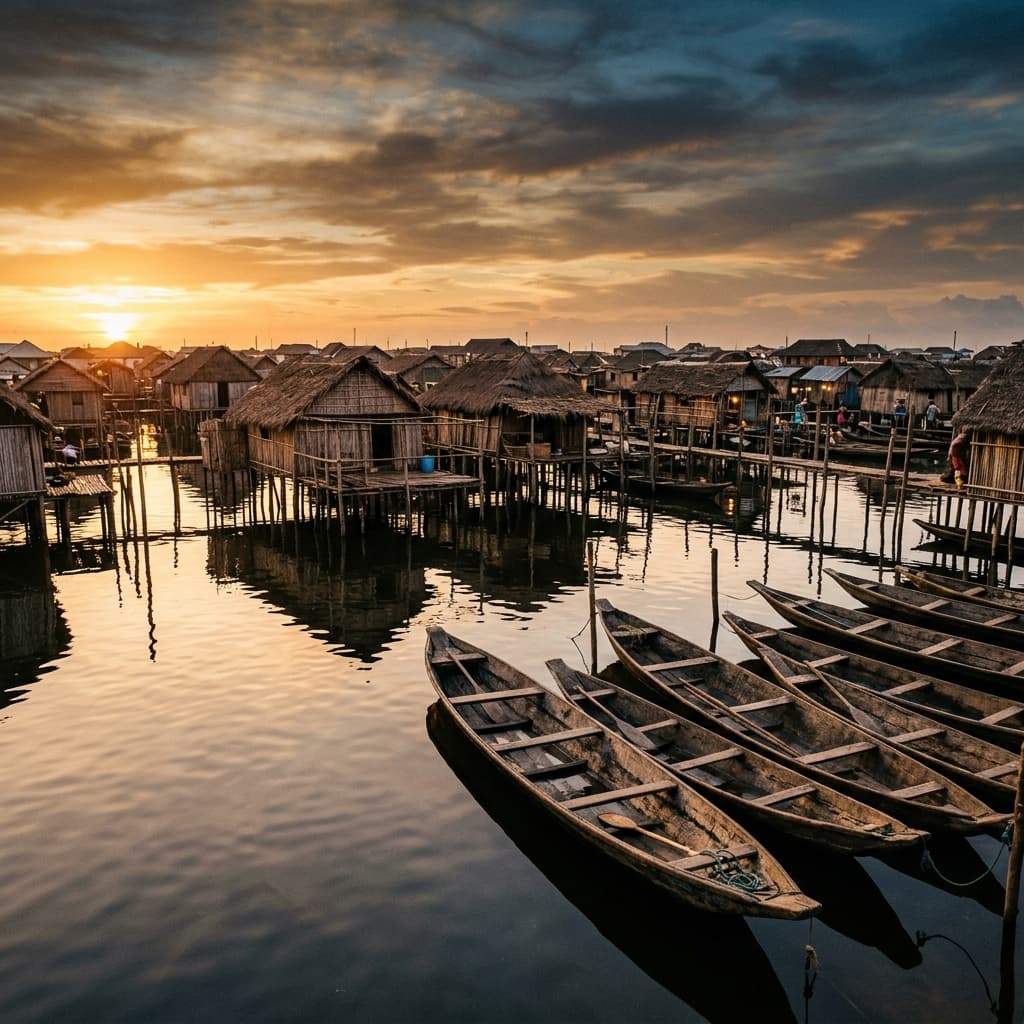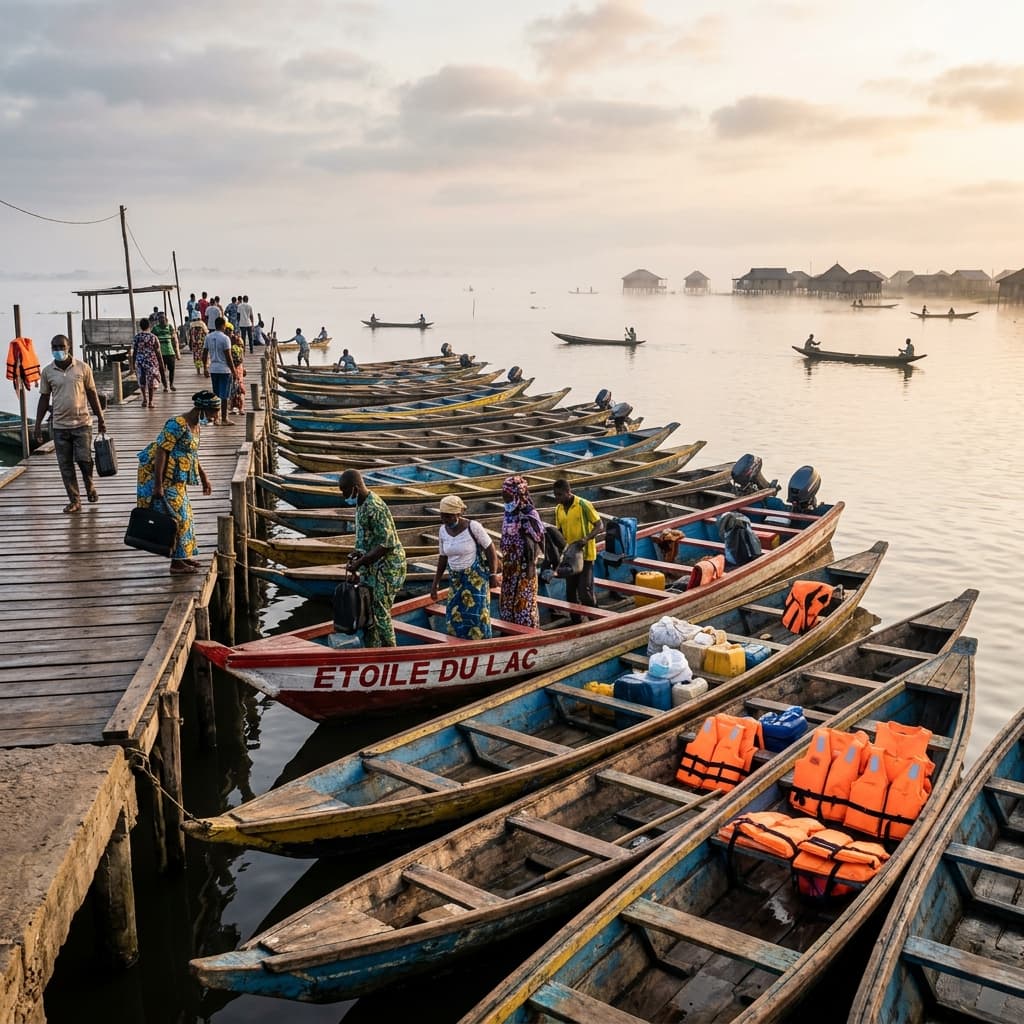

Discover the floating market of Ganvie, a unique spectacle in the world. Experience the authentic stilt village life and floating trade in Benin.
If Ganvie is often described as the "Venice of Africa," then its floating market is undoubtedly its Grand Canal, its beating heart and its nerve center. Imagine a public square made entirely of water, a liquid agora where hundreds of canoes, maneuvered with disconcerting agility, brush past each other, dock momentarily, and exchange mountains of goods without a single foot ever touching dry land. More than just a place for commercial transactions, this market is the lung of the lake city, the space where the survival, economy, and social cohesion of a population of more than 30,000 inhabitants are played out every day. It's one of the most fascinating aspects of what you can do in Ganvie.
For the traveler venturing onto Lake Nokoué for the first time, Ganvie's floating market is a sensory explosion: a kaleidoscope of colors, a symphony of sounds, and a trail of spicy smells. But to grasp all its richness and subtlety, one must understand the invisible workings of this unique river trade in the world. Here is our complete guide for a deep and respectful immersion in the heart of the Ganvie market. To prepare your journey, check our transport guide from Cotonou.
The floating market of Ganvie is the largest in West Africa. It starts as early as 4 am with wholesale trade (fish) and reaches its visual peak between 6 am and 8 am. Managed exclusively by the women of the stilt city, it is the nerve center of the local economy on Lake Nokoué.
A spectacle for early birds: The cycle of the market
The first golden rule for experiencing the floating market is to accept shaking up your biological clock. Unlike the terrestrial markets of Cotonou or Porto-Novo which reach their peak in the middle of the day, Ganvie's follows the ancestral rhythm of the sun and fishing.
The mystical appointment at 4 am
Activity begins while the darkest night still envelops Lake Nokoué. Around 4 am, hundreds of small lanterns (today often solar LEDs) begin to dance on the water like giant fireflies. These are the merchants converging from all districts of the village towards the central square. If you wish to experience this unique moment, we advise you to sleep on-site in a hotel in Ganvie.
Why this early hour? The answer is purely logistical: the fish caught during the night must be sold, sorted, and transported to the mainland markets (Abomey-Calavi and Cotonou) as soon as the first light of dawn appears to guarantee absolute freshness before the tropical heat sets in. It is a moment of rare visual poetry that only those who have chosen to sleep on the water in Ganvie can truly admire in all its splendor.
Daybreak: A chromatic explosion
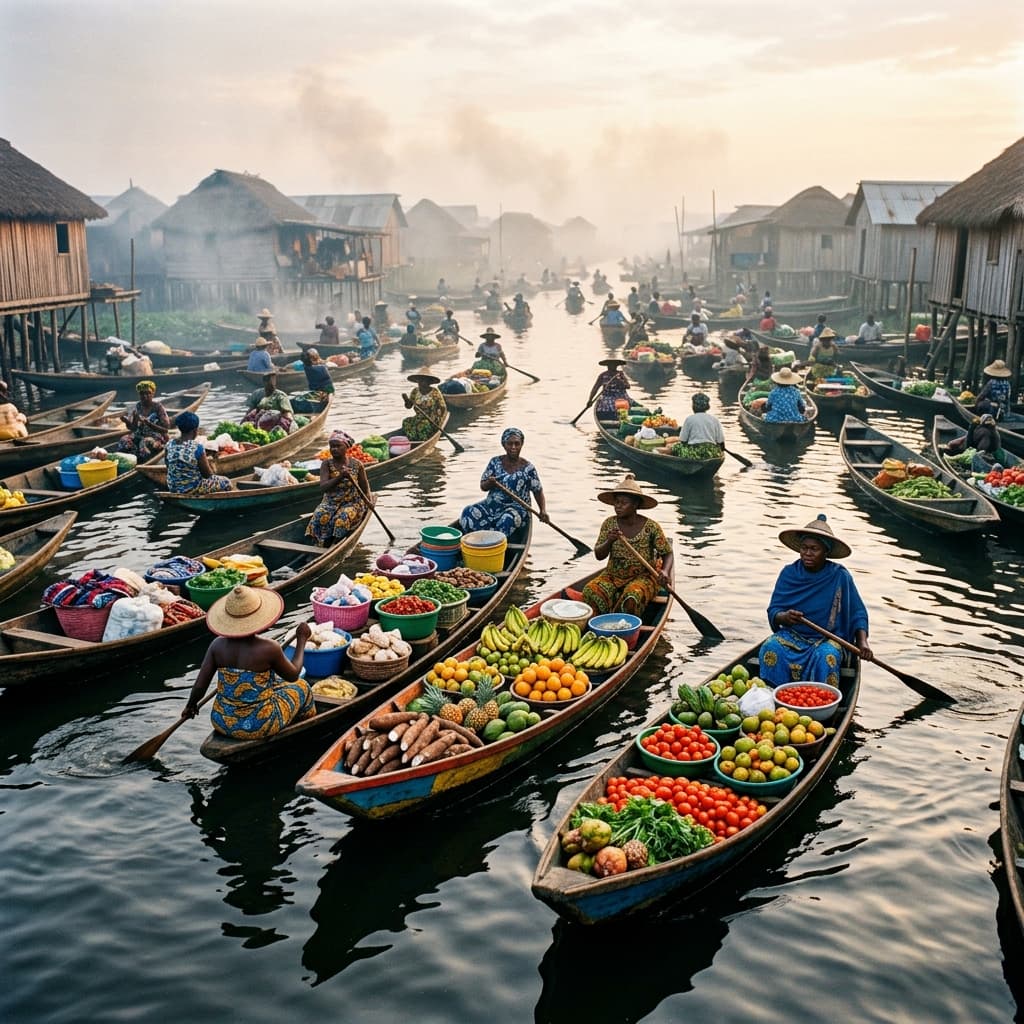
It is between 6 am and 8 am that the market offers its most spectacular face for photography enthusiasts. Under a low light that makes the surface of the lake shine, pyramids of red tomatoes, bright green peppers, yellow lemons, and multicolored fabrics of pagnes create a living painting of breathtaking beauty. The hubbub of negotiations, mixed with the rhythmic lapping of paddles, composes a sound atmosphere that cannot be found anywhere else on the planet.
The women of Ganvie: The pillars of the lake economy
In Ganvie, the social structure is very clear: while men are mainly responsible for fishing and construction, women are the true masters of economy and trade.
Impressive physical and mental dexterity
Observing a Ganvie merchant at work is a lesson in balance and management. They maneuver large wooden canoes, heavily loaded with hundreds of kilos of goods, with disconcerting ease. While keeping their craft stable in the incessant flow of the market, they calculate, negotiate, give change, and keep an eye on their children often settled at the front of the canoe.
What can you find at the floating market?
You can find absolutely everything necessary for the life of a city of 30,000 souls. It is a vital distribution center.
- Fishery Products: Tilapia, threadfins, shrimp, and lake crabs are the king products.
- Mainland Agriculture: Fruits, vegetables, tubers (yam, cassava), and cereals brought by populations from surrounding villages.
- Manufactured Goods: Kitchen utensils, fabrics, oil for lamps, and hygiene products.
- Lake Fast Food: Kitchen canoes where fried fish, fritters, and hot rice are prepared for merchants who didn't have time for breakfast.
Experience the Market's Bustle
Join us for a morning immersion in the heart of the floating market and discover the secrets of lake trade.
Tips for a respectful visit
The Ganvie market is not a theater set; it's a place of work. To ensure your presence is appreciated, follow these tips:
- Arrive Early: After 9 am, most of the trade is finished.
- Photographic Discretion: Always ask for permission before taking a close-up portrait of a merchant. A smile and a purchase of some fruit greatly facilitate contact.
- Let Work Canoes Pass: Merchants are in a hurry. Make sure your tour canoe doesn't block traffic lanes. To learn more about visit ethics, check our responsible travel guide.
Conclusion
The floating market of Ganvie is much more than a tourist attraction; it's a living monument to the resilience and ingenuity of the Tofinu people. It's here that the heart of the city beats, in this incessant ballet of canoes and these exchanges that have lasted for centuries.
Want to discover this spectacle for yourself? Book your excursion with Visit Ganvie and benefit from the guidance of a native who will explain all the secret codes of this extraordinary market.
Questions Fréquentes
Plan Your Visit
Discover the magic of Ganvié with our curated local experiences.