
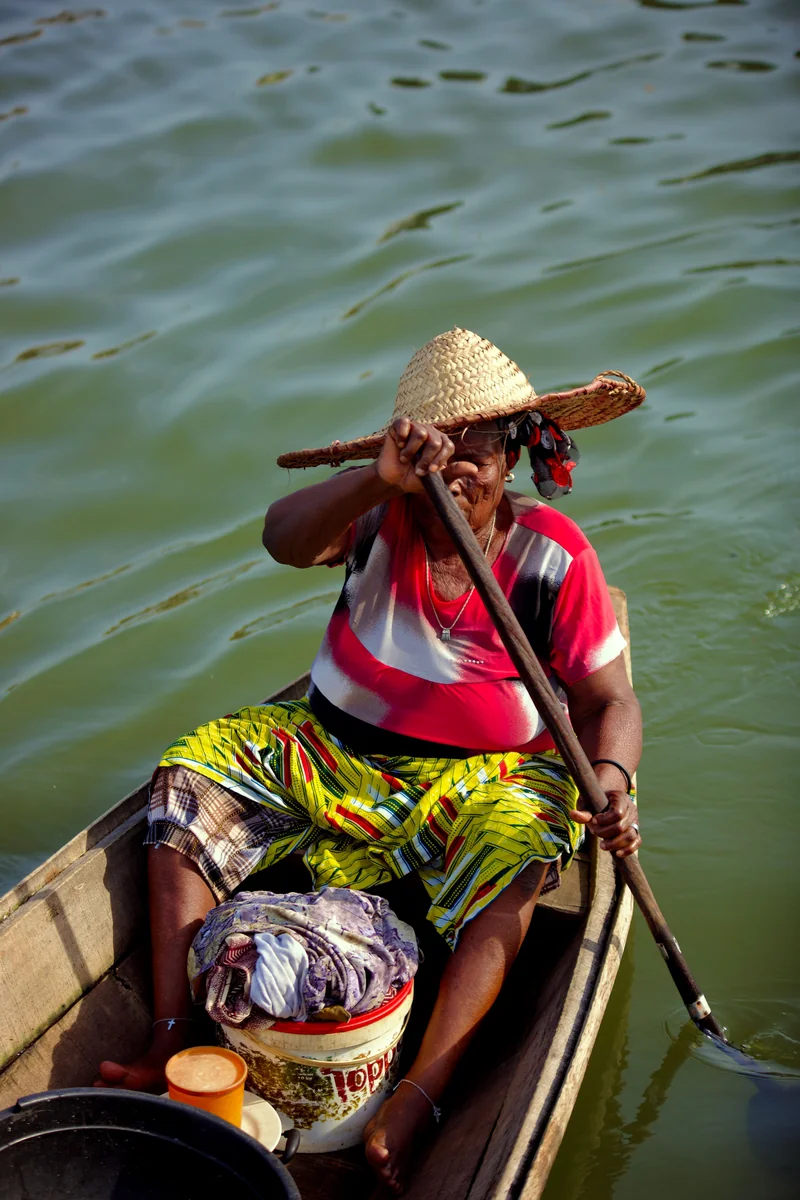
What to eat in Ganvié? Grilled fish caught that morning, peanut sauce, fried bean fritters and the traditional Tofinu dishes served on stilted platforms above Lake Nokoué.
When you ask what to eat in Ganvié, the answer is inseparable from the lake itself. The fish on your plate was swimming under your stilts before dawn. The vegetables arrived by pirogue from the mainland shores at the early market. The fire that cooked them is charcoal, not gas. Tofinu cuisine is not elaborate by design — it is honest, direct and rooted in the daily rhythm of the lake.
There is no written menu in Ganvié. What you eat on a given day was decided at the floating market that morning, based on what the fishermen brought in the night before. That constraint is also its greatest quality: the freshness is absolute, the connection between water and plate is real, and every meal tells you something about how the people here live.
Three things define the Tofinu table: the catch from Lake Nokoué, the produce that crosses the water each morning by pirogue, and the cooking techniques that Tofinu women have passed down across generations without writing a single recipe. This guide covers everything you can eat in Ganvié — from the grilled fish at noon to the street fritters at dawn — with reference prices, local etiquette, and the places where the food is worth sitting down for.
Grilled fish: the undisputed king of the table
No visit to Ganvié is complete without eating grilled fish from Lake Nokoué. Tilapia is the most common and most accessible. Fishermen set their Acadja traps — underwater brush structures that attract and concentrate fish naturally — in the shallows each evening and harvest specimens weighing 300 grams to a kilo, with firm, flavourful flesh.
The cooking method is direct. The fish is cleaned, rinsed and brushed with a paste of red palm oil, crushed garlic and fresh ground chili. No complex marinade. The flavour comes from the wood fire, the smoke and the instinct of the cook who knows exactly when to turn each fish — not a moment too soon, not a moment late.
Catfish (capitaine, or silure) is the other staple. Its fattier flesh handles slower cooking and develops a deeper, almost smoky taste. Locals who know their fish often prefer it over tilapia for its melt-in-the-mouth texture. The skin, grilled to a slight crispness, is edible and rich.
Lake carp appears at certain seasons, larger and meatier than tilapia, most often cooked in sauce rather than grilled whole.
Served with white rice, gari (cassava flakes), boiled plantains or akassa (fermented corn paste), the grilled fish of Ganvié gets a squeeze of lemon and is eaten with the right hand. Simple, direct and the kind of food you remember for longer than the photograph you took of it.
Acadja fish: a flavour found nowhere else
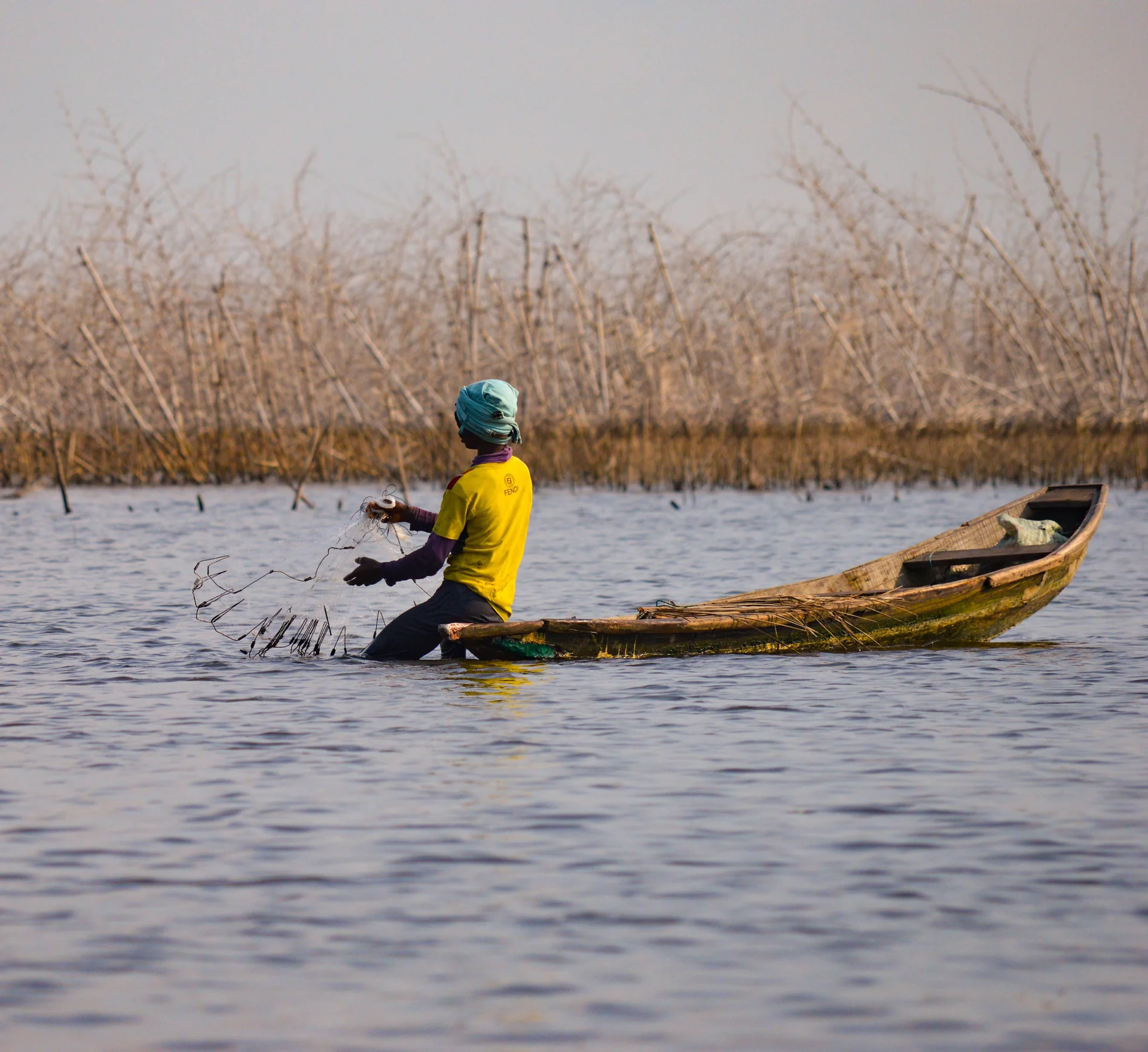 The Acadja system is a Tofinu fishing innovation — artificial reefs built from branches planted in the lake bed that create a refuge where fish breed and feed. This ancient technique gives Acadja fish a flavour profile distinct from open-water or farmed fish.
The fish grows in water rich with organic matter, feeding on algae and micro-organisms that thrive among the branches. The result is firmer, more flavourful flesh than lake fish caught in open water. Ganvié residents will tell you plainly: an Acadja tilapia is not the same fish as a standard tilapia. The difference is subtle for an unaccustomed palate but clear to anyone who grew up with it.
Acadja availability varies with the seasons. During high water in the rainy season, the branch structures are fully submerged and catches are abundant. In the dry season, the lake level drops, fish become somewhat scarcer and prices rise slightly. Guesthouses and eating spots that serve Acadja fish will mention it when they can — it is a quality argument that hosts do not overlook.
The sauces that define the cuisine
What distinguishes Tofinu cooking from the Fon cuisine of the mainland is the central role of the sauce. Every meal comes with a sauce that determines its character, density and heat level. The fish provides the protein; the sauce provides the personality.
Peanut sauce is the queen of the lacustrine table. Raw peanuts are ground in a stone mortar until smooth and oily, then diluted in fish stock with fresh tomatoes and sliced okra. The sauce simmers slowly, thickens and concentrates. It is poured over rice or cassava — never served separately, always integrated into the dish. Chili goes in at the end, calibrated for the household, which generally means calibrated for the youngest members at the table.
Okra sauce is thinner, with a slight natural gluiness that some visitors find unexpected. Fresh okra is sliced thin and cooked in fish stock with dried shrimp and salt. Some cooks add spinach or bitterleaf to thicken and colour the sauce. Its mild, gentle flavour makes it popular with children and preferred for afternoon meals.
Spiced tomato sauce accompanies almost everything. Fresh tomatoes from the morning market, onion, crushed chili and a dash of red palm oil heated in the pan first. It is the base sauce, the everyday one — ready in ten minutes when time is short, reliable when nothing else is at hand.
Palava sauce (leaf sauce) is less common but appears in some households. Made from pounded taro leaves with fermented palm nut seeds, this thick, dark sauce has a deep and slightly bitter flavour that surprises on first encounter. It is eaten with corn paste or rice and is one of the most deeply rooted dishes in the lacustrine hinterland tradition.
Morning street food: akara and what else paddles by
Every morning, small pirogue-kitchens move through Ganvié's canals before the sun is high. Vendor women pull up to stilt houses and pass over bags of still-hot fritters.
Akara is a fritter made from black-eyed peas (niébé) — soaked, ground with onion and chili, sieved to remove the skins, beaten into a light batter and deep-fried in palm or peanut oil. Crisp outside, soft and slightly airy inside, it is the standard breakfast across Ganvié. Families buy them by the dozen from the floating market or directly from the pirogue vendors who work the main canals at dawn. One akara costs 50 to 100 FCFA. A family's breakfast order runs 500 to 1,000 FCFA total.
Fried plantain fritters are rarer but worth finding. Ripe plantain is mashed to a purée, mixed with a little wheat flour and sugar, fried in small golden discs. Sweet without being cloying, they pair naturally with the condensed-milk coffee sold at stilt-top stalls early in the morning.
Corn or millet pâté, wrapped in banana leaf and steamed, circulates on some pirogues. A basic, filling staple that costs 50 to 200 FCFA and sustains for several hours.
For a better sense of the morning trading atmosphere, our guide to the floating market describes how these vendor women organize and what happens at the wholesale market before dawn.
The spices and condiments of the lake
Tofinu cuisine has its own base flavours that Cotonou restaurants rarely replicate, even when they cook the same dishes.
Iru (also called dawadawa), a fermented condiment made from néré seeds, is the umami anchor of the lake kitchen. Its smell is powerful and takes getting used to. Dissolved into a sauce that is slowly simmering, it adds a depth of flavour that nothing else provides in the same way. It goes into peanut sauce, okra sauce, and sometimes directly onto the fish before cooking.
Fresh chili is omnipresent. Unlike some West African cuisines that rely primarily on dried chili, Tofinu cooking prefers fresh green or red chili, ground in the mortar to preserve its aromatic oils. The heat is present but not dominant — skilled cooks calibrate the chili so the dish remains accessible to children and elders without losing its character.
Fresh ginger, grated, enters many fish marinades and certain drinks. Its digestive and anti-inflammatory properties are known to the Tofinu women who use it, even if they would not frame it in those terms.
Food preservation without refrigeration
Ganvié has no cold chain. Most homes have no refrigerator. No supermarket, no ice. Food preservation relies on ancestral techniques adapted to the lake environment.
Fish smoking is the primary method. Fish that is not sold immediately at the dawn wholesale market is smoked on wooden racks over slow-burning hardwood embers. The smoke dries the flesh and inhibits bacterial growth. A properly smoked fish keeps five to ten days without refrigeration. This is the form in which a large share of Ganvié's fish reaches the markets of Cotonou and Porto-Novo.
Sun-drying complements smoking for smaller species. Dried shrimp, roughly pounded, enter many sauces as a flavour agent. They keep for several weeks in a sealed pot.
Fresh vegetables arrive each morning by pirogue from the mainland. Women buy in quantities just sufficient for the day's meals. There is no surplus to store — not because of a philosophy imported from elsewhere, but because the logistics of lake life require managing what crosses the water carefully.
Where to eat in Ganvié

There are no restaurants in Ganvié in the conventional sense. You eat at your host's table, at the guesthouse where you sleep, or on the terraces of the few stilt-top eateries that serve visitors.
With your host. If you spend the night in a stilt guesthouse, dinner is almost always included. The family cooks what they catch and what the morning market provides. No written menu — it is decided when the women return from the floating market. This is the best option for genuine Tofinu home cooking. Tell your host in advance if you have dietary restrictions.
On communal terraces. Near the centre of Ganvié, two or three stilt-top platforms serve meals to day visitors. The menu is fixed: grilled fish, rice, sauce and a cold drink. Prices run around 3,000 to 5,000 FCFA per person. These spaces are run by Ganvié women and offer a front-row view of pirogue traffic in the main channels.
Pirogue vendors in the canals. Early morning, vendor women paddle through the channels with akara, fritters and sometimes thermoses of coffee. This is not a tourist service — it is the community's standard breakfast delivery, and you can participate if you are on the lake early enough.
A note on etiquette
If a Tofinu family invites you to share a meal, arrive with a small gift — sugar, bread or a drink for the children are appreciated. Eat with your right hand, wait for the host to begin and do not decline a second helping without a clear reason. Refusal can be read as criticism of the cooking.
Eating together: Tofinu table customs
The way people eat in Ganvié says something about the way people live in Ganvié.
Meals are taken seated on floor-level mats or low stools, directly on the wooden platform that serves as the living space. There is no table in most homes — the plank floor is the eating surface, the sleeping surface, and the workspace, depending on the hour. The sauce bowl sits at the centre, accessible to everyone. Each person eats from their own plate, but the sauce is communal.
The hierarchy of age shapes how food is distributed: elders receive their portion first, children wait. An adult visitor is treated with the same protocol as an elder — the most generous portion and the best piece of fish.
Conversation during meals is measured in traditional households. The meal is a moment of quiet coexistence, not debate. Dishes without table implements are cleaned from the plate using bread or the right-hand fingers, with the left hand kept at rest.
Leftovers are rare. Tofinu cooking produces very little food waste — portions are calibrated, fish bones go back to the lake, vegetable scraps go to domestic animals.
What to drink
Bottled water is available at small shops throughout Ganvié. Do not drink lake water under any circumstances, even boiled — bacterial contamination and heavy metal pollution from the Cotonou area make it unsafe without proper treatment.
Bissap (hibiscus infusion) is the defining local drink. Served very cold with sugar and sometimes grated ginger, its tart, floral flavour is immediately refreshing and completely unlike the industrial juices you find in city shops. A glass costs 200 to 500 FCFA.
Local soft drinks in glass bottles are available at stilt-top shops. The consigned glass bottles circulate between shops on the lake, transported by pirogue.
Sodabi, locally distilled palm wine, is produced on the lake shores. Served in reused bottles, it is potent — 30 to 45 degrees depending on the distillation. Some producers make quality sodabi infused with honey or local herbs. A social drink in small quantities, not a thirst-quencher.
Conclusion
Eating in Ganvié means accepting that the menu is not in your hands, but in the lake's and the women who read it each morning. It means trusting cooks who work without written recipes, with fish caught before dawn and vegetables that crossed the water by pirogue. The experience is memorable not for sophistication but for sincerity — the quality of food that comes directly from its place of origin, prepared by those who have inhabited that place across generations.
Book your excursion with Visit Ganvié and let us know your dietary preferences at the time of booking — we will find the right table for you.
Questions fréquentes
What are the must-try dishes in Ganvié?
Are there vegetarian options in Ganvié?
How much does a meal cost in Ganvié?
Is the fish really fresh in Ganvié?
What is the typical local drink in Ganvié?
Can I watch a Tofinu meal being prepared?
Related articles
Acadja fishing in Ganvié: the ancient aquaculture of Lake Nokoué
Acadja fishing is one of the world's most elegant low-tech aquaculture systems: branches planted in Lake Nokoué create artificial habitats where fish concentrate naturally. A Tofinu technique centuries old, now studied by international researchers as a model for sustainable fishing.
supportA day in the life of a Ganvié resident
An immersive look at Ganvié daily life: waking before dawn on Lake Nokoué, the floating market, school by pirogue, Acadja fishing, community crafts, family meal and the quiet of the lake at night.